



COLOR
The naked eye always detects a diamond’s light performance, and its color. That is why color is considered an important aspect in a diamond’s 4Cs. When we refer to a diamond’s color, what it actually means is the lack of color a diamond has.
A perfect diamond that has no hue will have a higher value. GIA grades their diamond’s color by comparing a stone under controlled lighting and precise viewing conditions to master stones of established color value.
GIA Color Grading Scale
DEF - Colorless
GHIJ - Near Colorless
KLM - Faint Yellow
NOPQR - Very Light Yellow
STUVWXYZ - Light Yellow
The yellow tint in a diamond gets more obvious as you move down the color scale. Hence, the less color the diamond has, the higher it’s color grade.
*GIA disregarded using A-C alphabets because some dealers use those grades for “in house grading” systems. The color grade D is the most expensive and rare diamond within GIA’s scale. However, the near colorless, G-J, has proven to be just as good, as the color is still unnoticeable, and the clarity and size are within your price range.
AGS has a numerical color grade scale,where 0 grade is Colorless, to 10 being Light and Fancy Yellow shortly following after.
0.0 - 1.0 : Colorless
1.5 - 3.0 : Near Colorless
3.5 - 4.5 : Faint
5.0 - 7.0 : Very Light
7.5 - 10.0 : Light
Fancy Yellow
To get a better sense of the visual difference in color grades, check out this video where we compared D - G color graded diamonds under various lightings.
A topic that deals a lot with affecting the color is the diamond’s Cut.
A diamond’s Cut is the proportions and measurements of a diamond. The way a diamond is cut can diminish a diamond’s color because if the facets are not aligned properly, the diamond can lose its fire, scintillation, and brilliance. Fire is the colors that exit and disperse to the human eye from the light return of the diamond. Although the Fire is completely different from a diamond’s Color, it is responsible for the sparkle of the diamond. Hence it makes the appearance of the diamond more appealing. A well-proportioned diamond will have each facet placed and angled correctly so that the light reflected back to the naked eye is maximized. For instance, a well cut diamond can reflect light in a way that would make its tint invisible to the naked eye, whereas a poorly cut diamond would make its tint more prominent. In other words, the better the cut, the less prominent the color is when viewed from face up.
There are two main factors that can hurt or improve a diamond in different aspects when it comes to a diamond’s color grade. The fluorescence and tint.
Fluorescence is the trace minerals in a diamond, that causes it to glow under UV (Ultra Violet) light or certain lighting conditions. Fluorescence comes from the source in where the diamond was mined. If the stone was found in an area where there was a lot of heat and left-over boron around the diamond, there will be Fluorescence within that diamond.
Fluorescence is graded:
None
Faint
Medium
Strong
Very Strong
The most common color of fluorescence is blue. However, there are other colors such as orange, white, green, blue and yellow. Blue fluorescence involves nitrogen atoms aligned in array within the carbon lattice. In most cases, Strong and Very Strong blue fluorescence makes the diamond appear hazy/milky. Medium blue fluorescence seldom makes the diamond hazy, while faint blue fluorescence almost never makes the diamond appear hazy.
Is Fluorescence good or bad?
Fluorescence can be bad if it affects the appearance of the diamond, causing it to look oily or milky.
This is caused mostly in daylight where the UV light rays from the sun activate the boron particles in the diamond, changing its appearance. The boron material is brought out by these factors and if the light is very strong, it can diminish the look of the diamond. Most of the time, very strong fluorescence can mask the true color of a diamond.
For example, when you are viewing diamonds under a well-lit ultraviolet light, a lovely blue-ish white diamond captures your eye. You can’t help but to buy it, so you return home with your new possession only to notice that this beautiful blue-ish white diamond you saw in the store has now turned yellowish-white! This can happen because blue is a complementary color of yellow, and in turn, whitens the look of a yellow-white diamond under daylight, or ultraviolet lights.
It may be good for a diamond to possess fluorescence if it enhances the diamond’s appearance.
Fluorescence can lower the cost of a diamond, which may be good for clients looking to buy diamonds with high clarity grades. Depending on the fluorescence, it can sometimes improve the color of a diamond. Faint fluorescence can make a positive effect on color grades G and below, while Very Strong fluorescence would normally overdo it.
Basically, Fluorescence rarely affects a diamond’s sparkle and brilliance, and it can make some diamonds appear brighter and whiter in warmer colored diamonds. Do note that since yellow tinted diamonds are usually undesirable, a yellow fluorescence in the diamond can make the price more affordable, whereas a blue fluorescence will increase the cost of yellow tinted diamonds.
What about a diamond's tint?
Even though diamonds can be found in many colors, the most common diamonds usually contain tints of yellow or brown, and the slightest tint will have a big impact on the diamond’s price. The term “off color” describes when the diamond’s purity is destroyed by a tint of color. Brown tints are usually undesirable because they look dark when mounted. Diamonds with a brown secondary undertone may also detract from the color, making diamond more affordable. Although the tint and color are affected by the environment you are viewing the diamond in, it is best to view it in a room fully lit with plain walls.
In the video below, we showed 3 piles of diamonds, where all of them are G Color, but with a brown, yellow and no tint.
There are many elements affecting the color in diamonds. This includes nitrogen impurities, which in turn, result in a yellow tint. Keep in mind, that once Yellow is off the colorless diamond scale, we then call it a ‘fancy color’. As nitrogen and hydrogen are most common, you can observe many diamonds with a yellow tint in the market due to the nitrogen in the diamond absorbing blue light. A rare but noticeable element is boron. When nitrogen and structural impurities combine together, internal graining happens, which in turn, results in a tint of brown in the diamond. Grey tinted diamonds have loads amounts of hydrogen, which is the cause for the grey color. Colorless diamonds contain little to no impurities and are chemically pure, as a result, they are very rare.
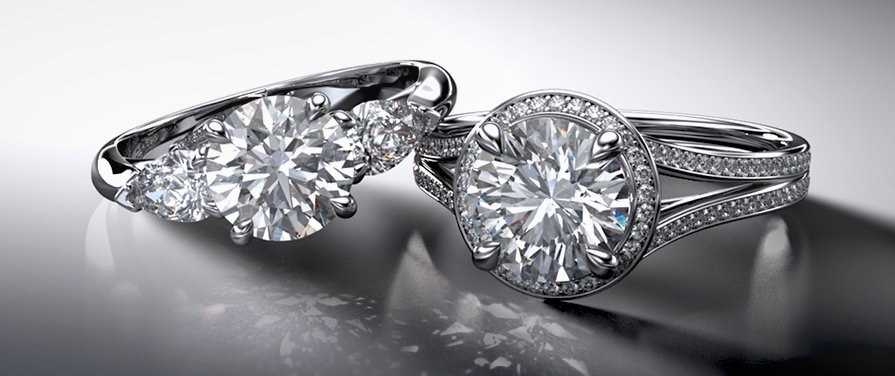
The color of the gold metal can affect a diamond’s appearance. Diamonds reflect light to the viewer’s eye as much as the material used on ring setting. Not choosing the perfect mount for diamonds can make it look larger or smaller, brighter or darker, whiter or more off color, or brilliant or dull. It is important to get the right metal for diamonds for this reason.
Some say for yellow tinted diamonds, they would look best on platinum metals, while others say it will look just as good with a yellow gold metal or an alloy, but to each their own. This is where contrast plays a big part, because if you have a Near Colorless diamond, around the grade K, and you place it in a platinum or white gold setting, the contrast will be increased, revealing an even more yellow color. Since G and H are Near Colorless and are on the upper grade on the Color scale, you should put it in white metal. For lower end of Near Colorless scale, such as I or J, where it shows a slight yellow tint, you would want to put it in yellow or rose gold.
Colorless Diamonds have more options when it comes to choosing mounts. Why? Simply because, they are colorless. This does not mean that you can choose unwisely, because different metals can still make an impact on your colorless diamond.
If you take a yellow gold metal and set your Colorless Diamond on it, the diamond will appear to contain yellow tint despite it being Colorless. If you do not want to add color to your diamond, white gold or platinum usually does the trick. Also, Platinum and White gold metals are great for durability! They last longer than others, and you will not have to get them fixed as often.